
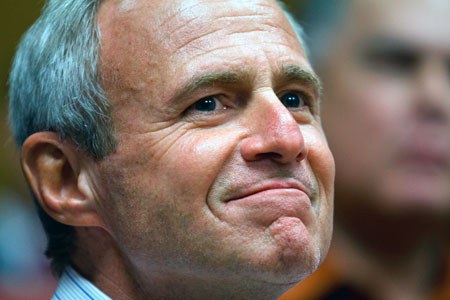
Forensic problems caused a wrongful conviction in the Michael Morton case.
— The Difference between Criminal and Civil courts
Law enforcement has crossed many lines in their efforts at obtaining convictions. Here is the problem. Their use of “scientific methods” to convict people such as bite mark analysis and arson investigations, like the one used in convicting Michael Morton to over 30 years of prison, are under fire by the nation’s scientific community. How has this happened? The simple answer is that the criminal judges in this country have forsaken the gate keeping role established by rule of law, while the civil courts have done an excellent job of keeping out fake science. Civil turned criminal defense attorney Mike Mosher articulates his shock at how the criminal courts do not follow established law when it comes to allowing in questionable police tactics to convict.
Daubert Factors
The established law in the United States for admitting forensic evidence is the Daubert standard. The Court in Daubert defined “scientific method” as the process of formulating hypotheses and then conducting experiments to prove or falsify a hypothesis. It sets out five factors in determining the legitimacy of a “scientific” method before the jury can consider it:
1. Whether the theory or technique employed by the expert is generally accepted in the scientific community;
2. Whether it has been subjected to peer review and publication;
3. Whether testing the theory is or will be possible;
4. The known or potential rate of error and whether it is acceptable; and
5. Whether the research is independent of the particular litigation or dependent on an intention to provide the proposed testimony. (In other words, a person cannot create a science just to use in court.)
We need to do more to solve these forensic problems
The purpose of the justice system is to arrive at truth. Truth is impossible when using fake methods to convict a person. As the commentator, Mike Mosher, refers to in the above video, it is alarming that our criminal courts across America have fallen prey to allowing the overzealous whims of law enforcement to dictate evidence, even when such evidence is fake.
Mimi met Mike at the nation’s largest DWI seminar put on by the NACDL and the NCDD in Las Vegas. He has spent a successful career suing pharmaceutical companies in civil courts over false claims to save lives. The low admissibility standard in criminal courts shocked him. Many criminal defense lawyers, such as Mimi, are used to the low standard used in admitting ineligible evidence. The problem is that criminal appellate courts let these forensic problems slide. There are innocence clinics popping up in law schools all across America trying to combat these forensic problems. We must be aware of these atrocities committed in our courts in the name of “tough on crime” and do better to prevent further injustices.
